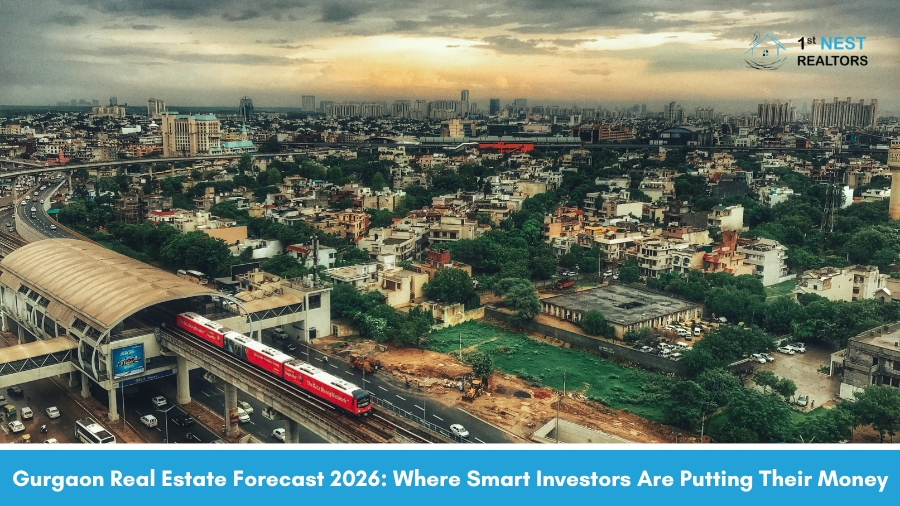
Gurgaon (officially Gurugram) has been one of India’s fastest-evolving residential markets for the past half-decade, a city shaped by corporate campuses, expressways, and large-scale township projects. Heading into 2026, the market is moving from a breakneck appreciation phase into a steadier, infrastructure-driven one. Below, we break down what’s happening, where the smart money is going, and how investors can position themselves for risk-adjusted returns.
Quick snapshot (what the data says)
-
Gurugram saw one of the largest price rises among India’s major cities since 2019. Price inflation in the city has been reported as extremely high compared to other metropolitan areas.
-
New launches and developer activity remain concentrated in growth corridors (Dwarka Expressway, Golf Course Extension/Extension Road, Sohna Road, Southern Peripheral Road / New Gurgaon). Q3–Q4 2025 showed strong launch activity for Gurugram.
-
Industry trackers and brokerage reports point to moderation: growth is likely to stabilise rather than collapse, a shift from rapid appreciation to consolidation driven by infrastructure deliveries and affordability pressures.
Macro drivers shaping 2026
-
Infrastructure is becoming the dominant value-driver
Completion and commissioning of expressway links, road widening and civic projects (and announcements of local infrastructure spend) are influencing buyer and investor interest more than speculative sentiment. For example, sustained improvements to road networks and municipal projects in late 2025 are already changing micro-market desirability. -
Shift in demand mix - mid and affordable segments remain central
While luxury projects get headlines, the bulk of real demand and absorbable inventory continues to be mid-segment and affordable units. Developers are prioritising these segments to keep sales velocity healthy. -
Corporate & office absorption supporting residential demand
Office leasing and corporate expansion in Gurugram keep a steady pool of salaried renters and buyers, underpinning longer-term housing demand, especially in sectors near business districts. -
Interest rates and affordability are the key short-term risks
Mortgage rate movements and policy nudges will determine the pace of home purchases in 2026. Reports suggest the market could “correct” from recent rapid price jumps toward more sustainable growth.
Micro-markets where smart investors are putting money (and why)
1. Dwarka Expressway: Why: Connectivity to Delhi, increasing number of integrated townships and pipeline of residential launches. Prices have room for further upside when last-mile infra and metro integration progress. Investor play: Mid-to-upper mid segments and family-oriented 2–3 BHKs in ready-to-move or near-completion projects.
2. Golf Course Extension / Golf Course Road: Why: Established premium corridor with persistent demand from executives and expatriates; tighter supply compared with peripheral corridors. Good for capital preservation and premium rentals. Investor play: Branded luxury apartments or premium resale in gated communities for rental yield and steady capital appreciation.
3. Sohna Road: Why: Large project stock and improving social infrastructure (schools, hospitals) make it attractive for end-users and long-term investors. It’s a common choice for families seeking value. Investor play: Mid-segment apartments and villas in established townships with delivery certainty.
4. New Gurgaon / Southern Peripheral Road (SPR): Why: Emerging office hubs, large integrated developments and lower entry prices relative to inner Gurgaon. This is a medium-to-long term play tied to infrastructure execution. Investor play: Early-stage purchases for a 3–5 year horizon; look for projects with clear approvals and phased completion schedules.
Property type focus - where returns look best in 2026
-
Ready-to-move / Near-completion units: Lower execution risk, immediate rental potential and easier access to bank financing, attractive to conservative investors.
-
Mid-segment 2–3 BHKs: Largest demand pool; best mix of liquidity and steady rental yields.
-
Integrated townships and lifestyle projects: Premium for families who value amenities and security; these projects tend to maintain demand even in moderated markets.
-
Luxury in limited supply corridors: Good for capital preservation and selective capital appreciation, but watch supply pipelines to avoid oversupply risk.
Risks investors must watch (don’t ignore these)
-
Execution risk: Large projects with delayed timelines can lock capital and hurt returns. Favor developers with delivery track records.
-
Interest rate volatility: Rate increases can reduce buyer affordability and cool demand. Monitor RBI guidance and mortgage spreads.
-
Inventory concentration in some micro-markets: Oversupply in specific luxury pockets could temper price growth; diversification across corridors reduces this risk.
-
Policy and stamp duty changes: Local policy shifts or tax changes can affect transaction velocity. Always confirm the latest state rules before transacting.
Tactical checklist for smart investors (actionable steps)
-
Target corridors with confirmed infra timelines (metro stations, expressway phases, arterial road completions). Projects near completion of civic works de-risk value.
-
Prioritise delivery certainty - ready/near-ready and completed projects reduce execution and financing risk.
-
Opt for mid-segment 2–3 BHKs for balance of yield and liquidity. These remain the most liquid asset class in Gurugram.
-
Check developer finances and RERA track record - prefer builders with transparent cashflows and completed inventory.
-
Run a local rental-market check before buying for yield assumptions - locations near business hubs usually deliver steadier occupancy.
Sample investment strategies by investor type
-
Conservative (capital preservation): Buy a resale 3-BHK in Golf Course Extension or an established gated community; hold for rental income and 3–5 year appreciation.
-
Growth-oriented (3–5 year horizon): Select mid-segment units in Dwarka Expressway or New Gurgaon with completion in 12–36 months, higher upside if infra milestones are met.
-
Yield-focused: Acquire ready-to-move apartments near office clusters for immediate rental; target neighbourhoods with corporate demand.
What to expect for prices & yields in 2026
Most industry trackers predict moderation, not a crash, after steep gains in prior years. Expect slower, more sustainable appreciation (single-digit to low-teens in specific micro-markets) and rental yields to remain modest (generally in the low single digits for prime Gurgaon locations). Exact movement will hinge on interest rates and how quickly last-mile infrastructure is completed.
Final take - The investor’s playbook for 2026
Gurgaon in 2026 rewards selectivity and due diligence. The era of broad, untargeted bets is giving way to corridor-level, infrastructure-linked investing. Smart investors will focus on:
-
corridors where infrastructure is either delivered or on a late-stage delivery path;
-
projects with delivery certainty and transparent governance;
-
mid-segment housing or ready assets for balanced risk/return; and
-
keeping a close eye on rates and developer balance sheets.
If you’re considering an investment, 1st Nest Realtors can help you run micro-market comparisons, validate developer credentials and shortlist ready and near-ready projects tailored to your return and holding-period targets.
